Prompts: latest from ‘Where to Start Writing’ in Margate

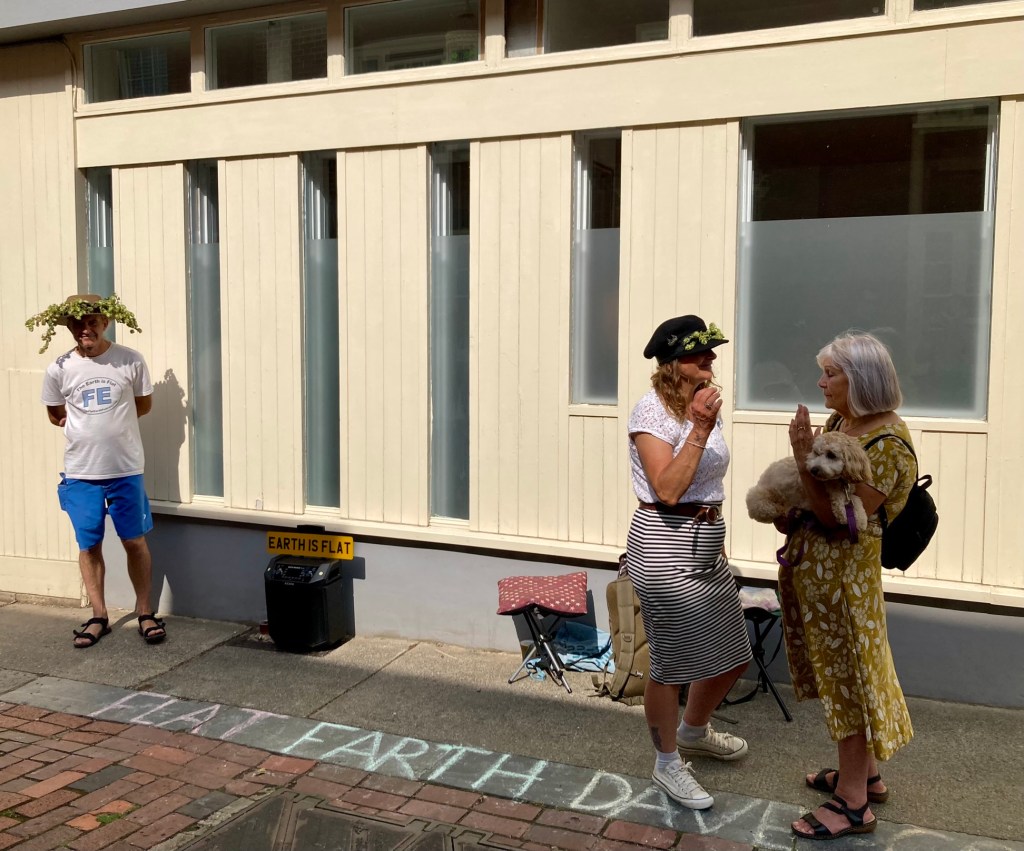
Yesterday’s written prompts from our Where to Start session yesterday in Marine Studios in Margate. A beautiful evening as we came out, with Turner skies:

‘Looking back, in many ways the days of the front line were my halcyon days.’

Time Come, Linton Kewsi Johnson about Railton Road in its ‘front line’ times

‘We set off the week before Christmas. It was freezing in London and our luggage sagged under the weight of our expectations and sketchbooks.’

Zandra Rhodes in Iconic

‘Dear Lonely Hearts, / my name is Nate / my hobbies are weightlifting / and tempting fate.’

Roger McGough in The Collected Poems: 1959-2024

‘Behold my bold provider, he can hunt and he can trap, / He can make a set of hinges from a piece of leather strap’

Pam Ayres, Doggedly Onward: A Life in Poems

When I come out of the bathroom, I hear Mum and Mervyn talking downstairs. At the mention of my name, I pause in the hallway to listen, my hair dripping, a towel wrapped around my waist like an untidy skirt

The Lost Past of Billy McQueen, Neil Alexander

Writing Prompts

Last Sunday at Marine Studios in Margate, my Where to Start Writing group were chatting about what sort of prompts work best. Many writers don’t need prompts of course. Their words churn in the brain like planes stacking above an airport and all they need is a quiet place and time. But sometimes we sit down to write and can’t get going.

If you have the confidence to start just anywhere, you won’t go far wrong. Fill a few pages with free scribbling, and keep writing – eyes down, let anything come – even when you think the words have dried. In time and with luck, your priorities about what you’re writing and then your story will find their way through to you.

Another way is use prompts. What did the Margate writers like best? Visual imagery was high on the list and I’ve added to my page of photo prompts here for you to have fun with. (I used to be able to add new photos to the top of the page but some update or other means we have to scroll down now, I’m afraid.)

Sensual prompts work too. As Marcel Proust knew, our sense of smell is marvellous for leading us by the nose down memory lane. Taste, touch, sounds especially music, they all work too. For me, anything from a kitchen drawer or in the bathroom cupboard can be useful. Hold whatever it is, really feel its textures and smells, its possibilities, its past, take a moment, then start writing…

A single word can be a good jump start sometimes. Specific words – blanket, door, pebble, rings, pages, trumpet – or abstracts like peace, exile, home, need, money, hope.

Character writing is excellent of course and my blogposts about getting deep inside your characters are useful there. A way back into writing a novel after a time of distraction is to choose an emotion (rage, love, grief etc.) and write a monologue for each of your main characters where they talk to you (and you write on your page or screen) how they feel about that emotion and how they are when they are deep in it. That should have them wading back into your imagination, ready for action.

Happy writing, however you do it. Here is a taster of my photo prompts for today:

Writing prompts for Churchill Writers meeting today

My Churchill Writers are meeting this afternoon, online because of weather at this time of year in the UK and because so many of us are unwell. Here are some prompts for anyone who can’t be with us – five to ten minutes for each one, just to see where they take you. Longer if the writing is taking hold:

‘Do I dare to eat a peach?’ From Eliot’s The Love Song of Alfred J Prufrock

‘Grief is a straightforward emotion’ – OrpheusHeathcliff Edna de Millay

‘Publish and be damned’ – the Duke of Wellington to aspiring blackmailers

‘I hear it in the deep heart’s core’ from Yeats’s poem The Lake Isle of Innisfree

Winter

Happy writing!

Through-line – the single most vital trick in writing a novel

And by vital I mean life-giving as well as essential. Your through-line is the great big question you ask at the beginning of your story, the one that keeps your reader hooked through every page.

WHAT IS YOUR BOOK ABOUT?

You could answer ‘about 30,000 words so far’. Many people say their book is about one of the big abstract issues like war, heroism, exile, true love or that mixed blessing we call family. Those are themes. Most good books have at least one theme though they’re not essential. So, a theme is an issue you would like your readers to think about, after they’ve closed your book and are going on with their lives.

Through-line

Your through-line is the big plot question you ask at the beginning of your story, the one that keeps your reader hooked until it’s answered, one way or another, close to the last page. It is not about the meaning of heroism in general, it is about the heroic survival of a particular character your readers care about. Through-lines are about what you want your readers to feel.

Your theme is:

  • an abstract question
  • appealing to the intellect,
  • affecting as many of your characters as you like,
  • that you need not answer – let readers make up their own minds,
  • is not necessarily something that will be attainable or resolved by the story’s end and
  • more than one theme is fine though, if you have more, they should link in some way.

Your through-line is:

  • a specific question about a particular need. Will Jill get a pony? Will Carrie marry Big? Will Sherlock find the killer? Will Black Beauty survive?
  • It’s an emotional question of high stakes
  • about a particular person, preferably your main character(s). A thousand pages of statistics teach us about rough sleeping but in Stuart: A Life Backwards (below) it’s Stuart’s own life story that gives it emotional urgency.
  • Your through-line question should be humanly attainable (achieving world peace goes in the ‘theme’ section) and
  • it must be attained or answered in the story. The answer doesn’t have to be yes but there should be a sense of resolution at the end.

An example of a through-line

A fine example of a powerful through-line is in Stuart: A Life Backwards. This excellent book came about when its author Alexander Masters worked in a facility for homeless people in Cambridge and met a rough sleeper called Stuart. They became friends and decided to write Stuart’s life story. Alexander’s first draft was painstaking but, by his own admission, dull. Stuart didn’t like it either and came up with a stunning through-line and structure.

Write it backwards, Stuart said, starting in the present and going back in time to his childhood. Write it like a Tom Clancy thriller, he suggested too, and next is where his marvellous through-line comes in. Readers should ask, he said, who stole Stuart’s innocence. Who ‘killed’ the boy he was.

Who stole Stuart’s innocence? Who stole his life, in other words, and when the answer comes, everything hilariously aggravating about Stuart (and there’s plenty) is instantly understood and the reader’s heart is broken. Stuart died between the finishing of the book and its publication: he didn’t survive to see Alexander awarded the Guardian First Book prize for their work.

Who stole Stuart’s innocence? Will Joey the Warhorse survive the Western Front and come home to the boy who trained him? Will Anna Karenina survive? Will the community of Watership Down rabbits ever manage to settle safely again? Will the boys in Lord of the Flies ever be rescued?

Golding cartoon

EXERCISE – 10 MINUTES

Choose one of your favourite stories? Give yourself ten minutes to define and write about its through-line. This is not always as easy as it sounds. In the film Titanic, for example, we know that Rose survives for decades after the wreck. The film’s through-line is how she survives.

Your favourite story will have sub-plots – do they have through-lines too? Are they different from the main one? Are they linked to it and to each other? Do the characters have their own personal through-lines? How do they all connect?

EXERCISE – 10 MINUTES

Let’s think now about the story you are writing. Please don’t be discouraged if this exercise turns out to be tricky. At first draft stage, it’s not at all unusual to have through-lines that spread like deltas – in fact, that’s often why people lose heart and give up. Thinking about your through-line at any stage can help keep you on track.

See if you can sum up your through-line in 20 to 30 words. It may well feel impossible but keep trying. You might find yourself coming up with three or four through-lines. Don’t worry, your story is work in progress.

Exciting as your several through-lines might be, it’s important to keep scribbling around them until one edges forward as the most urgent. Some classic novels have more than one but if you’re working on your first novel, try to keep things simple and clear. The clearer your through-line, the stronger and more saleable your story will be.

Your through-line is precious. It’s your story’s backbone, its engine, the thread that holds your story’s beads together, and it should appear somehow in every chapter. Occasionally readers will forgive a little tangent but keep it brief. (By Book 4 of A Game of Thrones, George RR Martin had so many of us readers by the heart that we kept reading as if it was an endurance test, but our favourite characters and their through-lines were missing from that fourth book and, to be honest, he lost a lot of us.)

Once you’re confident of your through-line, congratulate yourself. You now have what is known as your ‘elevator pitch’ for those precious ten seconds when somebody introduces you to an agent or publisher and you’re asked what your novel-in-progress is about.

Crucially for your story, once you know your through-line, you are equipped to destabilise it in every stage of your story, nudging up your stakes as you go, until you reach your destination. As Wilkie Collins said, make them laugh, make them cry and, above all, make them wait.

A QUICK WORD ABOUT STAKES

What lowers your stakes? Anything that makes a reader put down the book and forget to pick it up again. This list comes from my Cambridge writing group – please feel free to add your own:

  • Repetition,
  • Diverting the story into something else (away from your through-line),
  • Too much leaden description,
  • Telling us what we know already or can guess,
  • Spelling out every damn thing,
  • Being predictable, or too unpredictable,
  • Unsympathetic or boring characters,
  • Showing off research and
  • Mistakes.

FINAL EXERCISE – 10 – 15 minutes to start with

For practice, let’s imagine a static scene where one of your characters is sitting in a traffic jam, pauses lost in thought while they’re up to their wrists in washing up water, or takes time out to look at the sky.

whit evening

First, let’s discover how your character (X) is feeling at the beginning of the scene. Start with a brief scribble-chat together:

  • What can X see, hear, taste, smell and touch?
  • Is X hot or cold, comfortable or not, in tight clothing or loose, in a familiar place or a strange one?
  • What is X’s mood: stressed or calm, low or excited, fearful etc.?
  • How does X feel about what’s just been happening ? For example, has X just left an exam or job interview and is worried about the outcome?
  • What does X want most in all the world?

You should have X’s voice flowing nicely in your imagination now as they lead you through their senses, surroundings, mood, context and agenda.

Now, and this is the crux of the exercise, find a way to bring X’s thoughts around to your through-line, if you haven’t already. As you keep writing, see if you can let your character raise your novel’s stakes to greater urgency with a lightning jolt.

Even a static scene can be full of activity. In fact, the contrast in pace can work to your advantage and produce an unforgettable chapter. As long as you bring your stakes and character together with your through-line, all will be well.

Happy writing!
Happy New Year! What’s coming up next?

Happy New Year to you all and thank you for dropping by, so often and in such numbers. As well as happiness for you and your loved ones, I wish you all a productive, successful writing year. If, by next January, you have a regular writing practice and know roughly where your writing is heading, you will have achieved a lot. That may not sound like a lot but, believe me, it is.

Usually with my writing groups, our second term (in a sort of academic year) is about plot. It’s my favourite: we get to sit around telling each other our favourite stories and chatting about books that have stayed with us through a lifetime.

Usually whenever people look for writing advice, they’re after hints on writing dialogue, show and tell, point of view, that sort of thing. The Box of Tricks. Should I change my usual tilt and go for that now? Then, this morning, I read this.

Storytelling is not about cheap tricks and formulaic writing. It is one of our oldest and most valuable crafts. Character interests us readers first. Plot keeps us engrossed until we reach that fantastic combination of inevitability, surprise and bittersweet longing for more that is a perfect ending. It’s not about writing to a tired formula – I am all for you reinventing the wheel as often and thoroughly as you can, go for it! But if your story has hit buffers and you’re not sure why, then thinking about what has worked in the greatest stories of all time can help.

So, the Box of Tricks is going to wait. We’ll start by looking at the oldest classic plot in the book: Quest. See you here on Sunday!

Where are we now?

My blog was later than usual this week so here is an extra post to warm us up for the writing weekend…

We’re travelling deep into the hidden furrows of your characters’ hearts and memories now so it’s time for a breather before we go even deeper. Let’s look around at the places in your story where your characters eat, sleep, work, suffer, celebrate and love.

SHORTCUT

Your draft flows more quickly, more consistently if you get to know those places early in your writing. Most important of all, find out how your characters feel about them.

This is about more than location: what are the colours, smells, textures and sounds that tell us about your character and are significant for your story? What is the atmosphere in each place? How does the air move there? Is it warm or cold, stuffy or clear-headed, does it bring a taste to the mouth? Does it bring memories? Above all, does your character want to be there? Why? If not, where would they rather be and why?

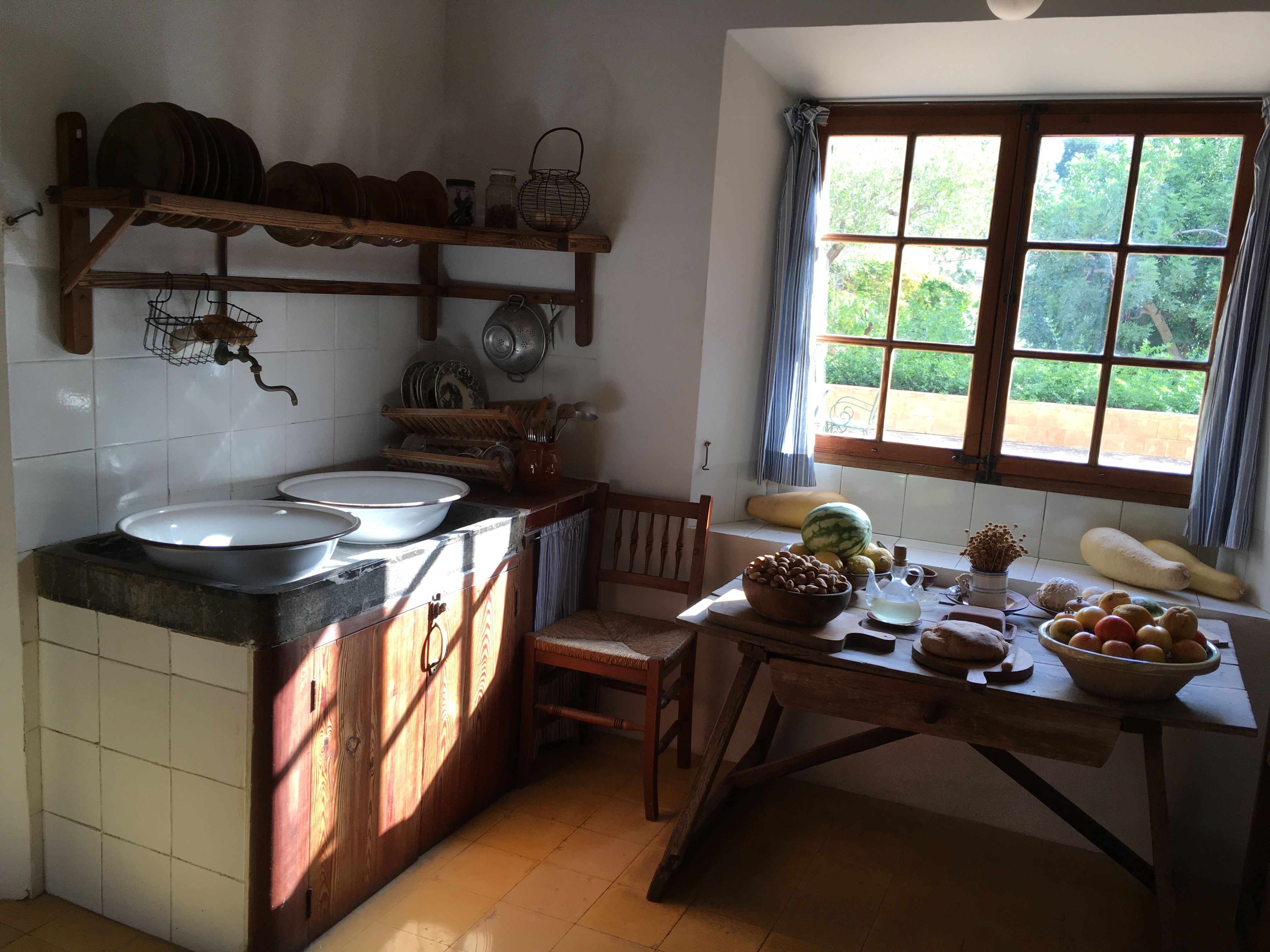
  • Let’s start at home. Using your scribble-chat technique, let your character invite you to where they live and show you, a room at a time, their kitchen, sofa, bathroom, garden/ view from the rooms, bedroom, bed and so on. Robert Graves’ kitchen in Mallorca is below – I loved that place.

IMG_1293

  • How does your character describe their bed. Tracey Emin was right, you’ll learn a lot.
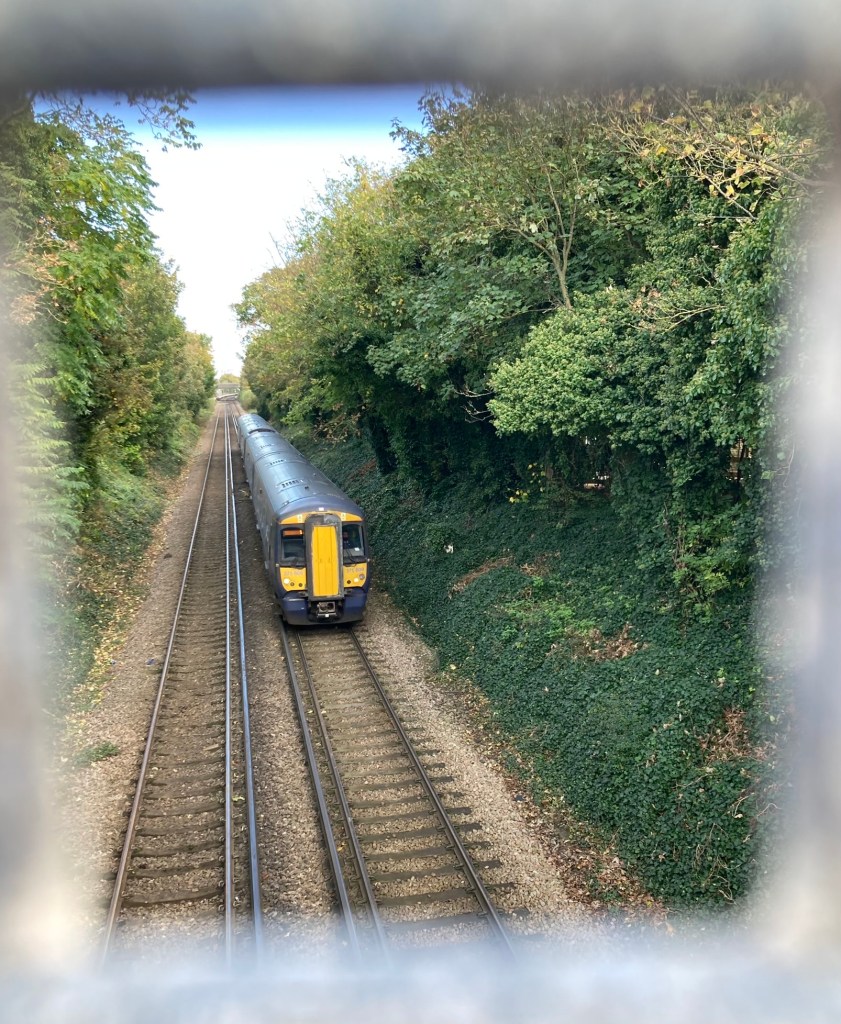
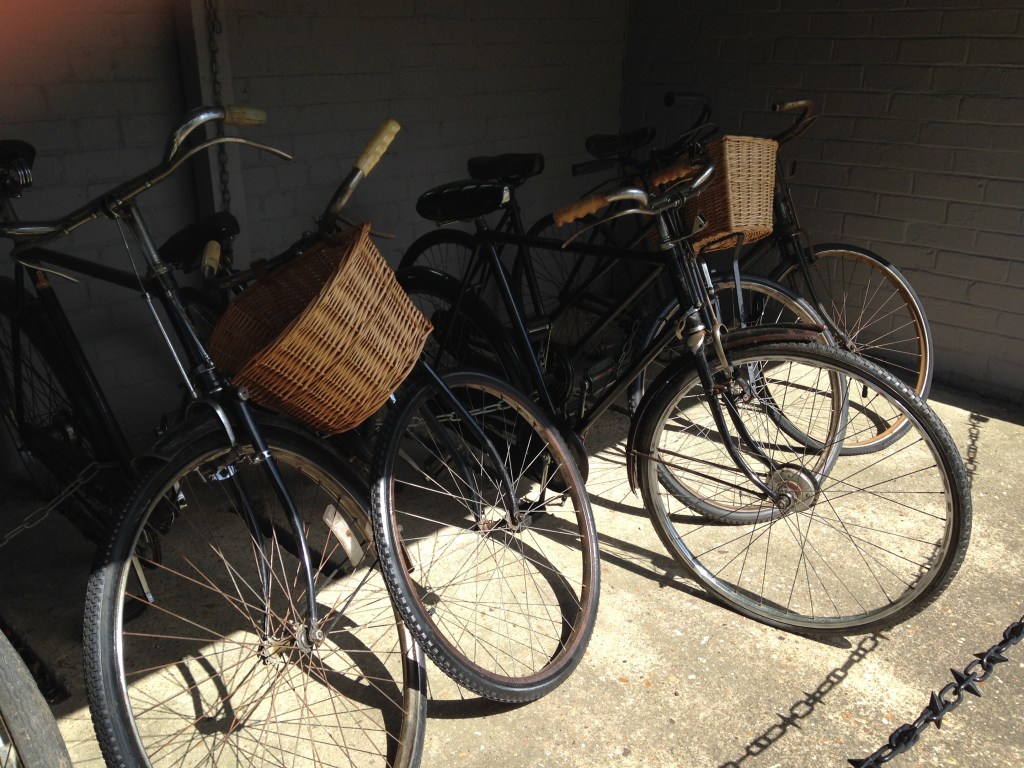
  • Let’s move on to day to day travel – how does your character usually get around? Ask your character to describe their car, bike, route to work etc.
  • From there, it’s easy to lead the scribble-chat to your character’s work place. We spend vast chunks of our lives at work and have a wide range of feelings and reactions to it.

IMG_1186

  • What does your character do in spare time? Find out about their gym, choir room and so on.
  • Can you think of other places that are important to your character? Friends’ and relatives’ homes, for example. Worship spaces. Places to socialise.
  • Where is your character’s favourite place in all the world, real or imaginary?

2016-07-18 20.50.00

Different characters will see the same places differently of course and that’s always fun.

As usual, this is just exploration. You could have another go next week and find yourself up to the eyes in different answers. That’s great! You can choose what excites you most and works best for your characters and your story. Above all, you are immersing yourself more and more in your characters and their world, letting your writing flow, and getting closer to a deeply imagined, consistent draft.

On Sunday we move to Stage 4 – where is your plot’s engine? See you then!