How do we get started when our book is begging to be written and we can’t seem to get on with it? Yesterday I gave the usual answer: just write. Start, anywhere, anyhow. The only thing that matters is to get going and keep going. Well, that’s one way…
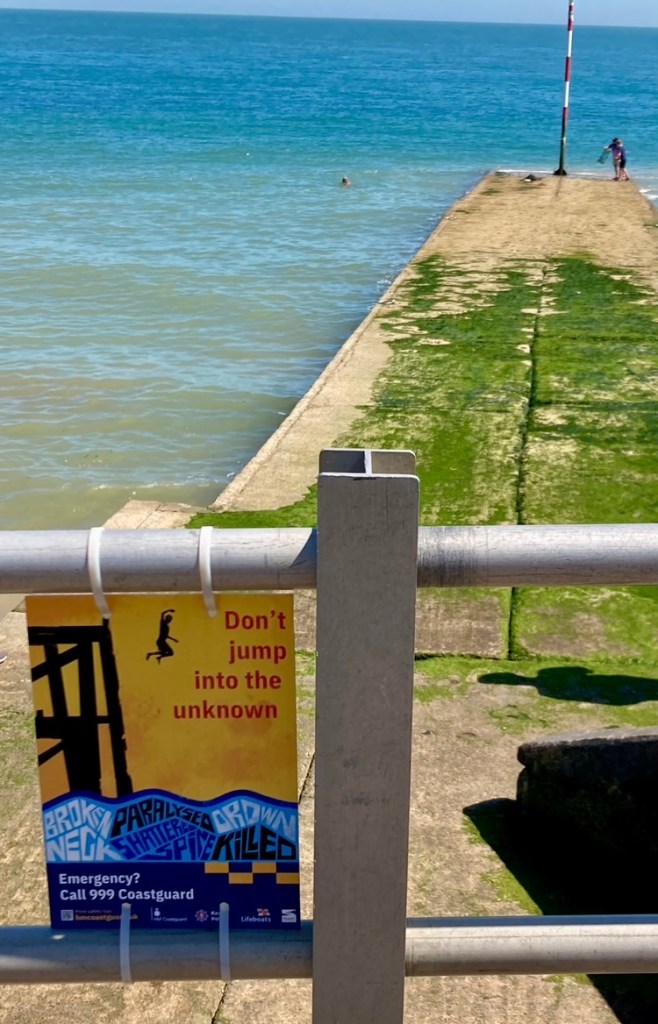
How about if, like me today, that still feels impossible? We can see other people in those waters swimming away but can’t quite make the jump? #startwriting
Another answer that’s worked for me countless times over the thirty or so years I’ve been writing has been to relax and write around the book. It can be as good for poems, a non-fiction chapter or a review as for fiction. I get a nice ordinary pen and some A4 – your favourite writing materials are perfect – and write to my heart’s content about questions like these: why do I really want to write this book; at its core, what is it about, to me and everyone else (not necessarily the same answer); why does it appeal to me; why am I the best person to write it; where do I want the story to go and why, and so on. You can dip back into this relaxed state of exploration any time you like if your writing stalls and you need to paddle in shallows again for a while. The more we allow ourselves to flow like this, the easier it is to glide into producing first pages, almost without noticing.
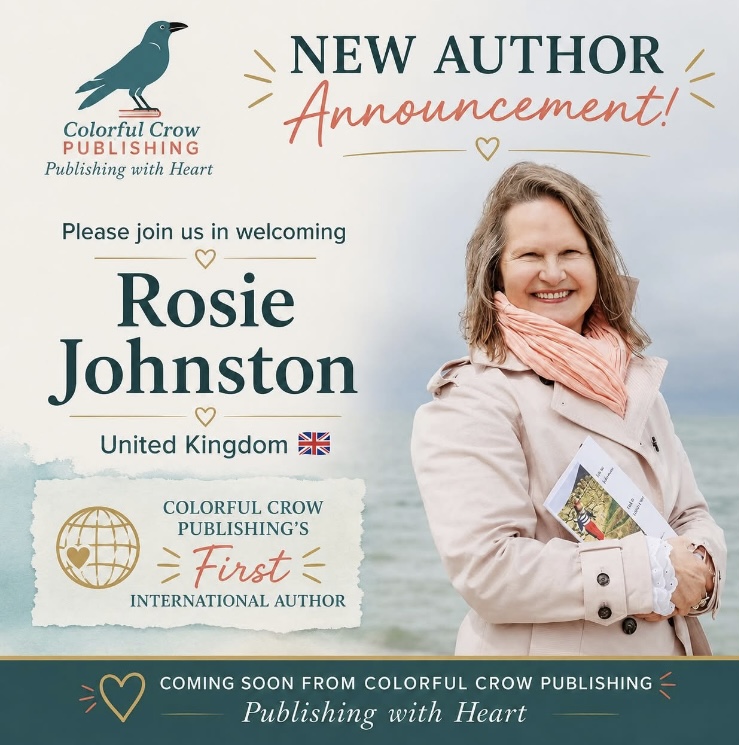
It’s a mixture of writerly wool gathering and potholing. More about these early stages of our process, and things not to worry about when you’re setting out as a writer, in my new book scheduled for publication next year by Colorful Crow Publishing. It’s about how we can start, rebuild our writing mojo and sustain a writing process for life. Happy writing!
Writers circling their novels before they #startwriting ?
How do we move from endless preparations into the real start of a new book and take the writing plunge?
For around six months now (I know, I know) I’ve been chasing a new novel and it’s time to let it catch me. It’s historical so there’s research. I’ve been chatting to the new characters too, learning about them. And that has given me lots of scenes, some of which have landed with me like a roaring thunderstorm during my ‘quiet writing’ times in Broadstairs and Sturry.
Playwright Tom Stoppard said the most difficult part is getting to the top of page one. Is that our best place to start? Or is it too daunting? With a first draft, the only important thing is to finish it. Start anywhere, let your inner writing self run amok and keep writing until you can feel that the thing has reached some sort of conclusion. If it helps, sketch out and plan and start in the middle. People have been talking about ‘in medias res’, starting in the middle like the Ancient Greeks and Romans. That’s usually about the finished structure of your story but it can apply to where you start your draft too. Just fly – you can tidy up later.
What you’re after is the urgency of a good story, the intoxicating voices of your main characters as you step aside and let them tell the story through you, and a breathless, powerful finish. Everything else can be fixed later. ‘Good enough for now’ really is good enough for your first draft.
My next book, scheduled by Colorful Crow Publishing in the USA for next year, will have tips I’ve learned the hard way about how to develop a writing process for life, how to nurture the first glimmer of an idea, and how to start and keep going time after time even when we feel as if we’re skittles in a bowling alley with life throwing everything at us. As I feel my way into the adventure of writing this new novel, I’ll post tips again so that we can write together, wherever you are.
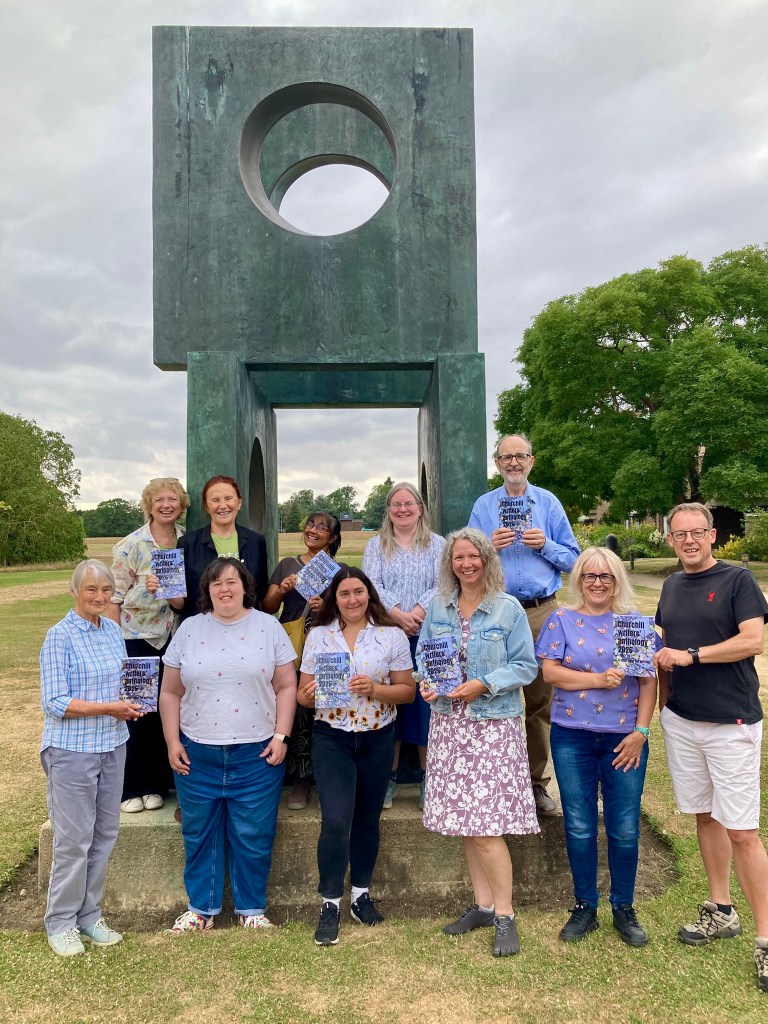
Lovely day in #Cambridge yesterday with my Churchill writers. We wrote together, chatted about what writing tips #Homer can offer us, about writing in 1st, 2nd or 3rd person, & most of all we celebrated the group’s latest, brilliant anthology. Congratulations to every one of them for their courage, tenacity & talent 🙂You can buy their book here – unbelievably only £4.30. Many thanks to Gervase Vernon, writer & publisher, and Caity Ross, writer & editor https://www.amazon.co.uk/Churchill-writers-anthology-2026-writing/dp/B0H64D6CDC
Churchill Writers last Saturday in front of the college’s famous Barbara Hepworth sculpture
What storytelling tips can we take from Homer? Isn’t that all too many centuries ago to be any use to us now? Absolutely not and I look forward to seeing how master-storyteller Christopher Nolan handles it in his latest film The Odyssey. My father was a classicist and I grew up with Polyphemus terrifying Odysseus and Hector facing down Achilles as my bedtime stories. Polyphemus was hilarious, by the way. My dad was passionate about Homer’s two huge stories: The Iliad (the story of the Bronze Age war between the Ancient Greeks and Trojans) and The Odyssey (the winding story of one soldier’s return from that war to his home, his wife and himself).
I used to post here about how to start writing and keep writing in the face of life’s distractions and head winds. Essentially, how to build a writing process for life. Those posts have become the first of many refining drafts of my book Pebbles in Our Shoes scheduled to be published next year by Colorful Crow in the USA. Homer’s ten tips on brilliant storytelling will be there.
For now, three #writingtipsfromHomer are:
Start in the middle. The Romans talked about starting ‘in medias res’, literally in the middle of things. Preferably at a moment of peak anxiety, crisis and danger for all your main characters. Don’t worry about the back story, you can fold that in as you need it. Readers are surprisingly willing to help you on this; they’ve always loved it.
‘Start in the middle’ works for when you want to start writing your book and don’t know how. Start anywhere, just pitch in as freely and wildly as you like. You can tidy and rearrange later.
Second tip is that you can make your characters as complicated as you like. We are all full of contradictions and secret failures and desires, and the Ancient Greeks and Romans recognised that. Write what you feel to be true.
Third is that we have always loved magic realism (gods throwing their weight about, monsters, rocks that move, weird spells) so if that is what excites you, write to your heart’s content. We’ve always loved it.
Enjoy your writing group if you have one. The right people around you – understanding, supportive – are the finest support a writer can have. Happy writing!