I get asked now and again, as if it’s a weird thing to do, why I write. Well, I didn’t always. Lots of us spend years talking and thinking about writing as if that’ll do the real thing for us.
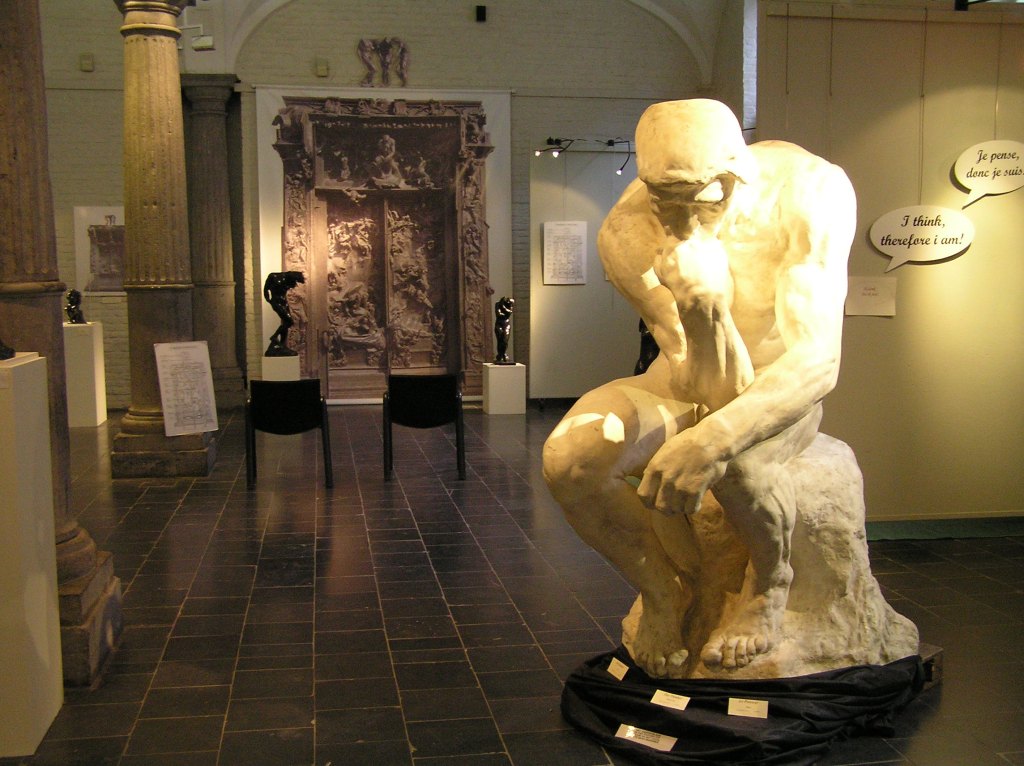
Je pense, donc j’ecris?
I was over 35 before I could muster enough confidence to give time to writing, even though I’d known as a tiny child the great joy of sitting alone in a crowded room, in my own bubble happily making stuff up on a page.
The first answer is that we write for the sheer fun of it. As painters and musicians, sculptors and dancers do, we get a nudge from some inner compulsion, or an unexpectedly lovely experience, that to give ourselves to creativity like this can be pure pleasure. Even more so if we turn out to be good at it though that stage comes much later.
The deeper we allow ourselves to sink into this writing malarkey and give long hours to it, the more fun comes to find us. Thoughts and stories spool from our fingers in ways that don’t feel quite our own and we can’t wait to do it again. If two or more of us are writing together as #writingbuddies, magic can happen in that ringfenced time that releases cascades of imagination apparently from somewhere beyond us.
Then there’s the Rubik’s Cube stage where the pleasure is in fitting words to a poetic structure or wrangling a plausible plot into shape, until the marvellous ‘click’ moment when something might just work.
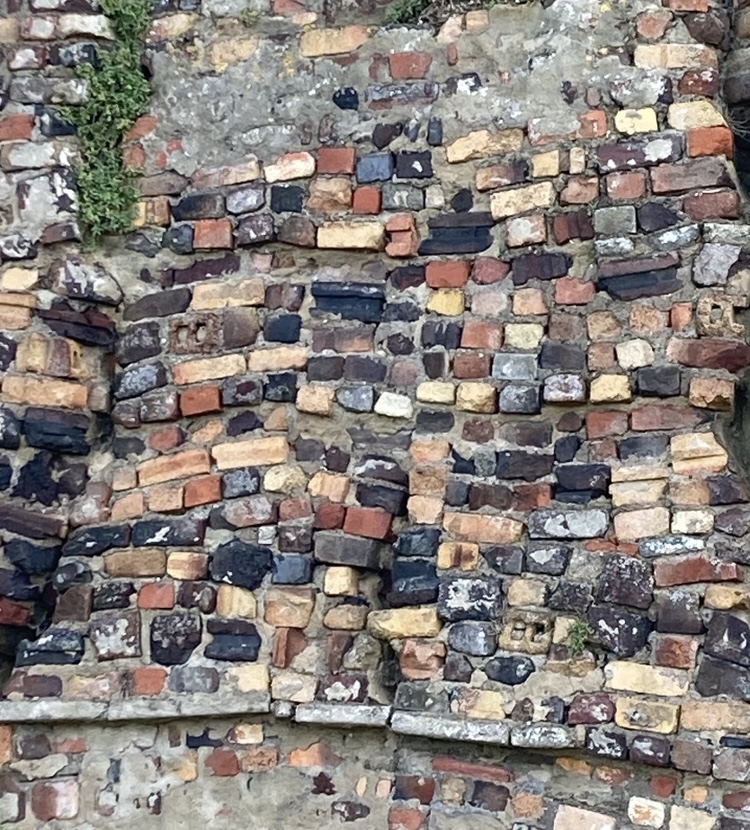
A sea wall close to where I live.
Even editing – condensing, spotting tautology, correcting, trimming – can have a robust thrill like pruning a tired shrub in the allotment before winter.
The wonderful thing about any craft is that the more we do it, the more skilled we get and the more of the craft we want to do. So, here are 3 tips #writingtips to guide you back to your writing if you’ve hit a dry patch. There will be many more in my book scheduled for publication by Colorful Crow Publishing next year:
Try to write something every day connected with your novel or poetry, or just your will to write. Bits of conversation exchanged by your characters, weird rhymes, notes for research, a rant by one of your characters, your feelings about where the plot’s heading in spite of you – writing it down keeps you in the loop of your book or poetry and stokes your inner writer’s fragile confidence.
Always congratulate yourself on writing around your story or poem as much as on producing shiny pages of draft. We all do it. It’s all needed.
If an idea or scene is bugging you and you can’t get started, try this old trick I developed in years of journalism. Get something, anything, down fast, last thing before bedtime. It can be as rough as it comes, it doesn’t matter. When you wake up, you’ll find that two things have happened. One is that you have something to work on. Big step forward. The other is that your unconscious mind has been busy while you slept and you wake to new ideas and verve. You might even have those elusive ingredients: the shape of what you want to write and the all-important gist.
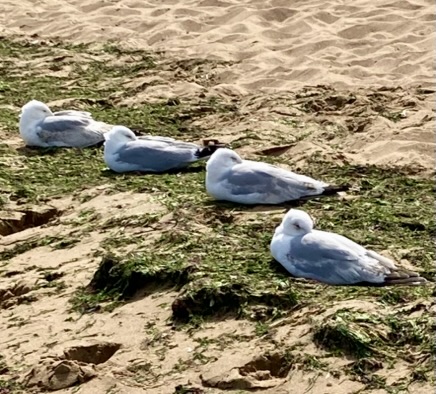
Seagulls working on their gist.
Number 4 is #writingbuddies of course and I’m deeply grateful to all mine, everywhere.
Nolan ignored swathes of excellent, often funny dialogue from the original. My favourites are the deliciously romantic, crossed-purposes-or-are-they conversations between Penelope and Odysseus. Top goddess Athena is utterly dull in Nolan’s film while Homer’s is lithe, funny, flirty, and as wily and quick witted as Odysseus. And Nolan has changed the theme from nostos (the hard toil of an old soldier finding his journey home, joyful at last, to his family, his country and himself) to how dreadful and irredeemable we humans are for destroying the world.
Apart from that?
Ah yes. Nolan has excised possibly the oldest written joke we have. It used to have me and my father rolling around laughing before I was even at primary school. He’d act the dialogue between Polyphemus, the one-eyed giant, and Odysseus who is trying to escape him, with my dad playing all the parts, including the sheep. He was a classicist (Trinity, Dublin in the 1940s) and my earliest bedtime stories were of Paris and the jealous goddesses, Odysseus and Penelope, Hector and Achilles, Agamemnon’s return and the rest.
His whiskey glows by your bedside lamp, ‘Read Trojan Horse again, Daddy.’
Aeneas’s tears at the mural of sorrows, Achilles’ battle rage: he plays them all.
He weaves a lifelong wonderland: Priam, Mozart, the Clancys, Keats.
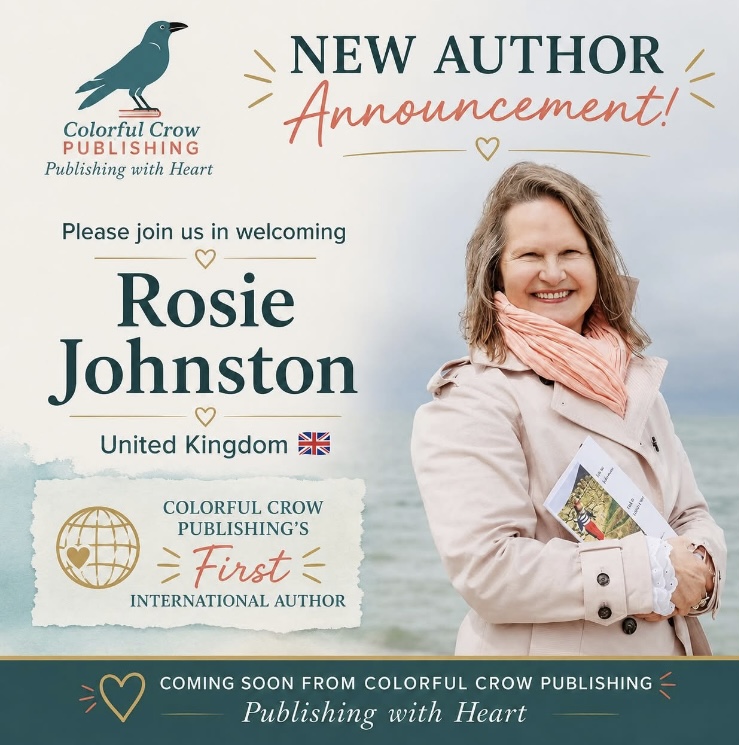
Colorful Crow Publishing is scheduled to publish my book next year about how to sustain your writing process lifelong. There will be more about Homer’s excellent lessons in storytelling there.
For now though, here are just a handful of Odyssey gems that Sir Christopher decided he could do without. There are plenty more:
Calypso is no therapist. She is another barrier to Odysseus getting to where he needs to be: a ‘love goddess’ who likes sex, has seen the male gods (Zeus in particular) help themselves to that side of life with humans and she’s decided to have her turn. Would those scenes not have challenged Odysseus and engaged us far more than Charlize Theron being all wise and understanding? In spite of Homer describing Odysseus as ‘the most miserable man alive’ in her care, his Calypso won’t let him leave her until the gods command her to set him free. She rants about gender inequality in the divine sphere, then does help Odysseus on his way.
Calypso fed divine ambrosia to Odysseus to cloud his memory . I thought this vivid poppy seed head might be prettier than a bowl of creamed rice.
Zeus’s Law: this is Nolan’s name for the laws of hospitality (Xenia in Greek) that bound and still bind many of us humans, across time and geography. If you have Irish family, you’ll know what I mean. Nolan’s characters forget to mention that guests are as bound by these laws as hosts. Penelope is besieged by ‘Suitors’ who rampage around her home, helping themselves to food, wine and slave girls, knowing that she would be in breach of Xenia if she turfed them out. They’re trying to coerce her into believing that she must be a widow by now, so should remarry one of them, ceding Ithaca, the castle and all Odysseus’s power to her new husband. Those ‘Suitors’ are as much in gross breach of Xenia as Polyphemus, the one-eyed giant, who bites the heads off Greek soldiers who have strayed into his cave.
Every section of Homer’s Odyssey has some breach of Xenia in it, with just two exceptions that I can think of. One is Telemachus’s visit to King Menelaus (lovely behaviour on both sides). The other is Odysseus’s time spent with the Phaeacians who find him washed up on their shore, feed, clothe, listen to him, dry his tears and then help him find the easiest way home.
The Trojan Horse.Nolan has said that his inspiration for the film is the image of a huge bronze horse washed up on a beach. Wherever that came from, it wasn’t from Homer. He’s right that Odysseus’s idea to smuggle Greek soldiers into Troy inside a constructed horse was a severe breach of Xenia. But Homer is clear at every point that it’s a wooden horse, probably knocked up on the battlefield from old bits of carts and boats. Adam Nicolson’s book The Mighty Dead: Why Homer Mattersexplains that at the time of the action of the story, tamed horses had just revolutionised farming and that a horse-shaped gift would have been mightily persuasive. Horses had transformed warfare too, making chariots and javelins new essentials.
How could a bronze horse statue have worked on that battlefield? It would have been improbably difficult to shift. We are told that Trojans shoved swords through to test if anyone was inside. When Helen comes out of Troy to inspect it, Menelaus tells us that she strokes its timbers and whispers, whispers through the horse’s flanks, sometimes in the voices of the Greek soldiers’ wives. How could she have achieved that through bronze?
There are so many clear references in Homer (eg: 4: 272, Menelaus describes Odysseus’s courage inside ‘the Wooden Horse’; 8:493, the Phaeacian king asks the bard to ‘sing to us of the making of the Wooden Horse’ and more) that I can’t help wondering what source Nolan used.
Achilles is a sad loss from the film. I see his super-sized armour still stars, though it’s supposed to be Agamemnon who wears it. No. In Homer it’s Achilles who is part god and of superhuman size and strength, with special armour. It’s a pity to lose the scene, pivotal for Odysseus, when he finds Achilles in Hades (Graeco-Roman home of the dead) and asks how his old friend is doing. Achilles replies that he would give anything to have been the lowest serf or a shepherd quietly on a hillside all his life, rather than the world’s most glorious soldier.
Nolan’s film has Achilles’ armour look like Batman. They do walk among us, these god-like men.
That oldest joke in Western literature that had my father and me giggling all those years ago? Odysseus and his men are trapped in Polyphemus’s cave with his sheep. At dawn, they see that their captor is gigantic but has only one eye, in the middle. How can they smuggle themselves past him and out to freedom? Odysseus works out that if they blind the giant Cyclops and cling to the sides and bellies of his sheep, they can be carried out to safety. They manage, as in the film, to blind the giant and Polyphemus comes out yelling (yes, in the Greek soldiers’ own language): who did this to him? Odysseus says that he did and, when asked his name, quips that his name is ‘Nobody’. When the other Cyclops hear bellowing, that someone’s been hurt, they ask, ‘Who did this to you, Polyphemus?’ The giant has no choice but to reply, ‘Nobody did it. Nobody!’
How do we get started when our book is begging to be written and we can’t seem to get on with it? Yesterday I gave the usual answer: just write. Start, anywhere, anyhow. The only thing that matters is to get going and keep going. Well, that’s one way…
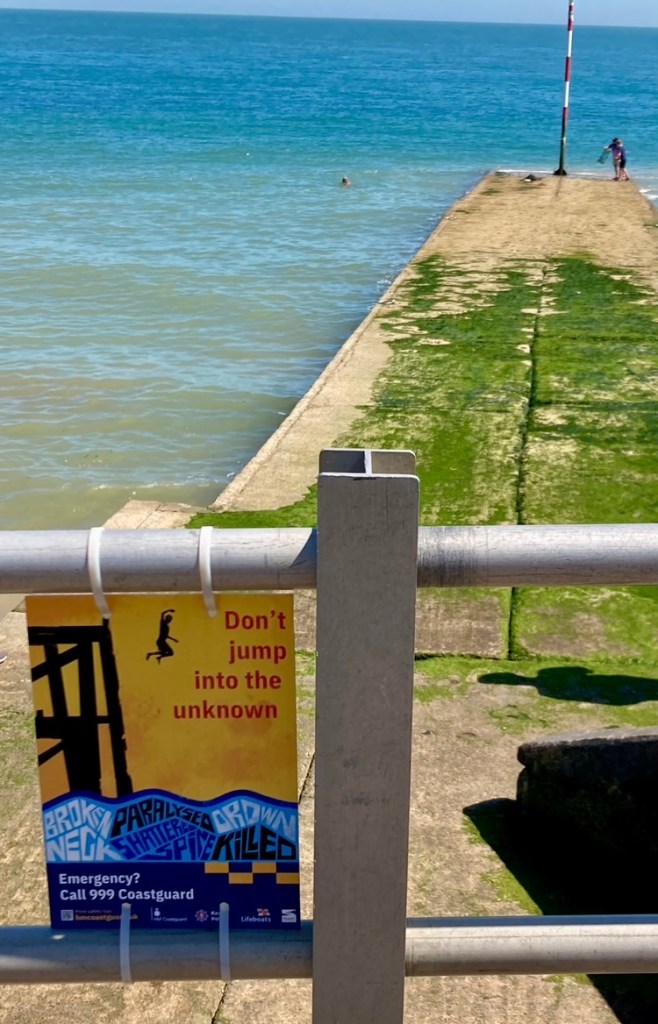
How about if, like me today, that still feels impossible? We can see other people in those waters swimming away but can’t quite make the jump? #startwriting
Another answer that’s worked for me countless times over the thirty or so years I’ve been writing has been to relax and write around the book. It can be as good for poems, a non-fiction chapter or a review as for fiction. I get a nice ordinary pen and some A4 – your favourite writing materials are perfect – and write to my heart’s content about questions like these: why do I really want to write this book; at its core, what is it about, to me and everyone else (not necessarily the same answer); why does it appeal to me; why am I the best person to write it; where do I want the story to go and why, and so on. You can dip back into this relaxed state of exploration any time you like if your writing stalls and you need to paddle in shallows again for a while. The more we allow ourselves to flow like this, the easier it is to glide into producing first pages, almost without noticing.
It’s a mixture of writerly wool gathering and potholing. More about these early stages of our process, and things not to worry about when you’re setting out as a writer, in my new book scheduled for publication next year by Colorful Crow Publishing. It’s about how we can start, rebuild our writing mojo and sustain a writing process for life. Happy writing!
Writers circling their novels before they #startwriting ?
How do we move from endless preparations into the real start of a new book and take the writing plunge?
For around six months now (I know, I know) I’ve been chasing a new novel and it’s time to let it catch me. It’s historical so there’s research. I’ve been chatting to the new characters too, learning about them. And that has given me lots of scenes, some of which have landed with me like a roaring thunderstorm during my ‘quiet writing’ times in Broadstairs and Sturry.
Playwright Tom Stoppard said the most difficult part is getting to the top of page one. Is that our best place to start? Or is it too daunting? With a first draft, the only important thing is to finish it. Start anywhere, let your inner writing self run amok and keep writing until you can feel that the thing has reached some sort of conclusion. If it helps, sketch out and plan and start in the middle. People have been talking about ‘in medias res’, starting in the middle like the Ancient Greeks and Romans. That’s usually about the finished structure of your story but it can apply to where you start your draft too. Just fly – you can tidy up later.
What you’re after is the urgency of a good story, the intoxicating voices of your main characters as you step aside and let them tell the story through you, and a breathless, powerful finish. Everything else can be fixed later. ‘Good enough for now’ really is good enough for your first draft.
My next book, scheduled by Colorful Crow Publishing in the USA for next year, will have tips I’ve learned the hard way about how to develop a writing process for life, how to nurture the first glimmer of an idea, and how to start and keep going time after time even when we feel as if we’re skittles in a bowling alley with life throwing everything at us. As I feel my way into the adventure of writing this new novel, I’ll post tips again so that we can write together, wherever you are.
Last Saturday our writing group in Churchill College, Cambridge was together again in person for the first time in months. Through the darkness and chill of winter, we meet by Zoom, which is cheery in its own way. But there is a magic about writers being in a room together that can ignite us, especially when we write together. Below are the prompts we used that day. I hope they work for you too:
Here, in this little bay,
Full of tumultuous life and great repose,
Where, twice a day,
The purposeless, glad ocean comes and goes,
Under high cliffs, and far from the huge town,
I sit me down.
(Magna Est Veritas by Coventry Patmore, 1823–1896)
Always it happens when we are not there —
The tree leaps up alive into the air,
Small open parasols of Chinese green
Wave on each twig.
(Metamorphosis by May Sarton, 1912–1995)
Loveliest of trees, the cherry now
Is hung with bloom along the bough,
And stands about the woodland ride
Wearing white for Eastertide.
(Loveliest of Trees, the Cherry Now by A E Housman, 1859–1936)
Cherry blossoms –
lights
of years past.
(by Basho, 1644–1694)
In time of silver rain
The butterflies
Lift silken wings
To catch a rainbow cry.
(In Time of Silver Rain by Langston Hughes, 1902–1967)
As usual, these prompts are not a task or exercise, just something – a few lines or as a whole – to blend into your thinking, so that when you’re ready to write for ten or fifteen minutes, something will come. Trust that, however long it is since you last had a chance to write, your words are waiting to fall onto your page or screen:
The sun is puce the sky is green
The streets awash with brilliantine
This is my redcurrant dream
(Recurrent? No just the once)
I’m psychedelicate
From John Cooper Clarke’s The Luckiest Guy Alive, 2018
I know a little cupboard,
With a teeny tiny key,
And there’s a jar of Lollipops
For me, me, me.
From The Cupboard by Walter de la Mare (1873-1956)
This poem is dangerous: it should not be left
Within the reach of children, or even of adults
Who might swallow it whole, with possibly
Undesirable side-effects.
This Poem… by Elma Mitchell
‘This was Mr Strugnell’s room,’ she’ll say,
And look down at the lumpy, single bed.
‘He stayed here up until he went away
And kept his bicycle out in that shed.’
Mr Strugnell by Wendy Cope
The atheist archbishop weeps
Life is just a trap
Gazing into the inky deeps
Of a Chateauneuf-du-Pape
The Ranks of the Heathen Saints from John Cooper Clarke’s The Luckiest Guy Alive, 2018
Who will bring me the secrets of night?
‘I,’ called the Bat. ‘By the moon’s silver light.’
These are for my Cambridge writers who are joining me later today. They’re for you too – if you find something helpful here. Happy writing:
I can still smell the smoke from the house burning in my brain
Dorianne Laux: Finger exercises for poets
The dog looked as if it was about to cry, too
Orhan Pamuk: The Museum of Innocence (trans Maureen Freely)
The nightmares. Some kept coming back like that one about the flowers. Enormous blossoms of all colors, opening and closing their petal-portals, come in, come in!
Lygia Fagundes Telles: The Girl in the Photograph (trans Margaret A Neves)
You may collect all the iroko seeds in the world, open the soil and put them there. It will all be in vain. The great tree chooses where to grow and we find it there; so it is with greatness in men.
Chinua Achebe: No Longer at Ease
I have frequently observed this curious aspect of power: that it is often when one is physically closest to its source that one is least well informed as to what is actually going on.
Robert Harris: Imperium (told by Tiro, Cicero’s confidential secretary for 36 years)
‘Looking back, in many ways the days of the front line were my halcyon days.’
Time Come, Linton Kewsi Johnson about Railton Road in its ‘front line’ times
‘We set off the week before Christmas. It was freezing in London and our luggage sagged under the weight of our expectations and sketchbooks.’
Zandra Rhodes in Iconic
‘Dear Lonely Hearts, / my name is Nate / my hobbies are weightlifting / and tempting fate.’
Roger McGough in The Collected Poems: 1959-2024
‘Behold my bold provider, he can hunt and he can trap, / He can make a set of hinges from a piece of leather strap’
Pam Ayres, Doggedly Onward: A Life in Poems
When I come out of the bathroom, I hear Mum and Mervyn talking downstairs. At the mention of my name, I pause in the hallway to listen, my hair dripping, a towel wrapped around my waist like an untidy skirt
Whether your New Year’s Resolutions were about writing, or whether (like me) you don’t reckon with them at all, this can be an excellent time for flexing your fictional muscles again after the festivities.
When I was little, my dad used to read to me at bedtime and a big favourite was The Wind in the Willows. Through furry creatures who live by and near a river, the book has huge things to say about our inner spirit and what everybody needs to thrive. One of the most important of course is food, so these characters have gorgeous picnics and ad hoc meals where the main ingredient is their wonderful friendship. Ratty (a water vole) is passionate about boating too. Feel free to use any of the following quotes as a prompt for five or ten minutes of writing, or as long as the spirit takes you:
‘And you really live by the river? [said Mole} What a jolly life!’ ‘By it and with it and on it and in it,’ said the Rat. ‘It’s brother and sister to me, and aunts, and company, and food and drink, and (naturally) washing. It’s my world…’ The Wind in the Willows, Kenneth Grahame
‘They had now entered a beautiful walk by the side of the water, and every step was bringing forward a nobler fall of ground, or a finer reach of the woods to which they were approaching; but it was some time before Elizabeth was sensible of any of it.’ Pride and Prejudice, Jane Austen
‘The minuet set Jack’s head wagging with its insistent beat, but he was wholly unconscious of it; and when he felt his hand stirring on his breeches and threatening to take to the air he thrust it under the crook of his knee.’ Master and Commander, Patrick O’Brian
Most stories are quests within a framework of work or love in one form or another, with techniques to escalate the stakes to a satisfying finish. Hobbies can be a side-issue, something to broaden a character’s appeal, or they can be at the heart of the story. If the second, the trick is to fold them in, from the start, so that the hobby itself rapidly becomes a matter of life & death. The British film Brassed Off is a perfect template. The UK’s coal mining industry was being closed down. Many pits had brass bands to help the miners’ breathing and morale, and the band in the film has been spectacularly successful. Two questions interweave: can the band survive closure of the pit, and can the miners themselves survive without work?
More prompts, from books about pastimes:
‘Every instrument employed was severely commented upon; but when he came to the wind, his indignation was terrible.’ Talks with Bandsmen by Algernon Rose, 1894
‘If you landed on a comet, you’d need to keep an eye on its orbit.’ Am I made of Stardust? Maggie Aderin-Pocock
‘Gardeners are born optimists, always looking forward to the year ahead, convinced that they will achieve much more than in the previous year.’ RHS Gardening through the Year by Ian Spence
Or you could sit down with one of your characters for a character chat and ask (writing down the answers as they flow) about their favourite fun things to do. When do they do them? Where? With whom? What are the contexts (teams, times of year etc.)? Is kit involved? Who organises, hosts, starts it all off? The character?(Why/ why not?) How does the character feel about it all? What do they hope for/ want? How’s it going? Why?
Wherever you are, wherever you’re writing, I wish you the very best in 2025 and beyond, and happy writing!
Last Sunday at Marine Studios in Margate, my Where to Start Writing group were chatting about what sort of prompts work best. Many writers don’t need prompts of course. Their words churn in the brain like planes stacking above an airport and all they need is a quiet place and time. But sometimes we sit down to write and can’t get going.
If you have the confidence to start just anywhere, you won’t go far wrong. Fill a few pages with free scribbling, and keep writing – eyes down, let anything come – even when you think the words have dried. In time and with luck, your priorities about what you’re writing and then your story will find their way through to you.
Sensual prompts work too. As Marcel Proust knew, our sense of smell is marvellous for leading us by the nose down memory lane. Taste, touch, sounds especially music, they all work too. For me, anything from a kitchen drawer or in the bathroom cupboard can be useful. Hold whatever it is, really feel its textures and smells, its possibilities, its past, take a moment, then start writing…
A single word can be a good jump start sometimes. Specific words – blanket, door, pebble, rings, pages, trumpet – or abstracts like peace, exile, home, need, money, hope.
Character writing is excellent of course and my blogposts about getting deep inside your characters are useful there. A way back into writing a novel after a time of distraction is to choose an emotion (rage, love, grief etc.) and write a monologue for each of your main characters where they talk to you (and you write on your page or screen) how they feel about that emotion and how they are when they are deep in it. That should have them wading back into your imagination, ready for action.
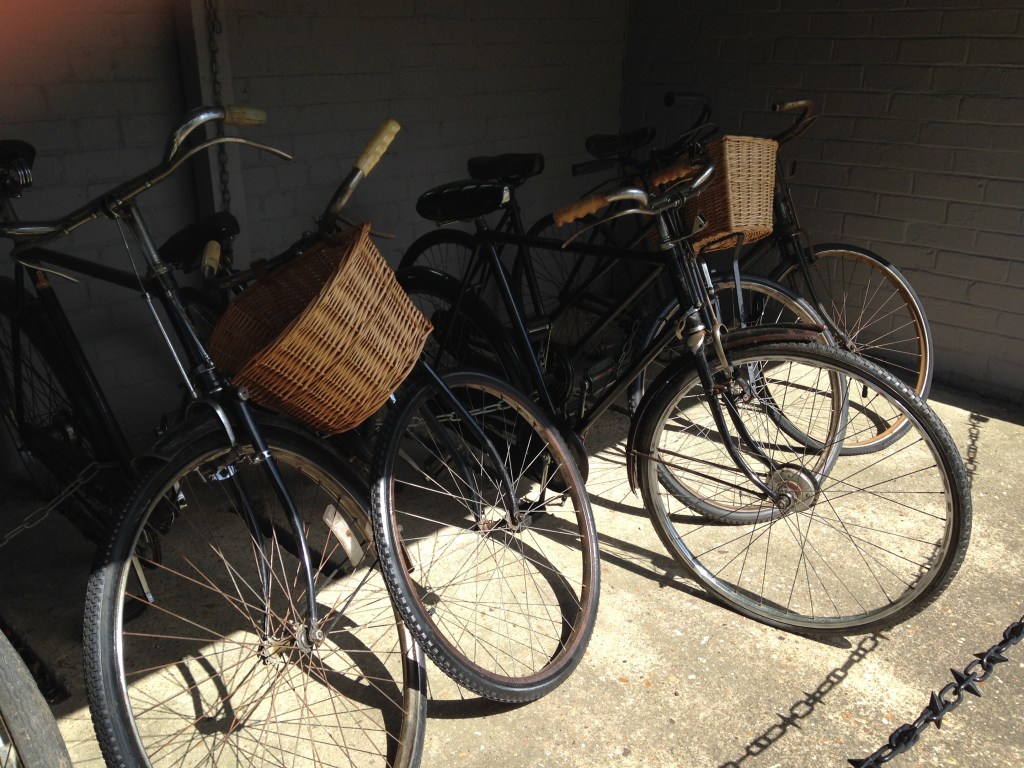
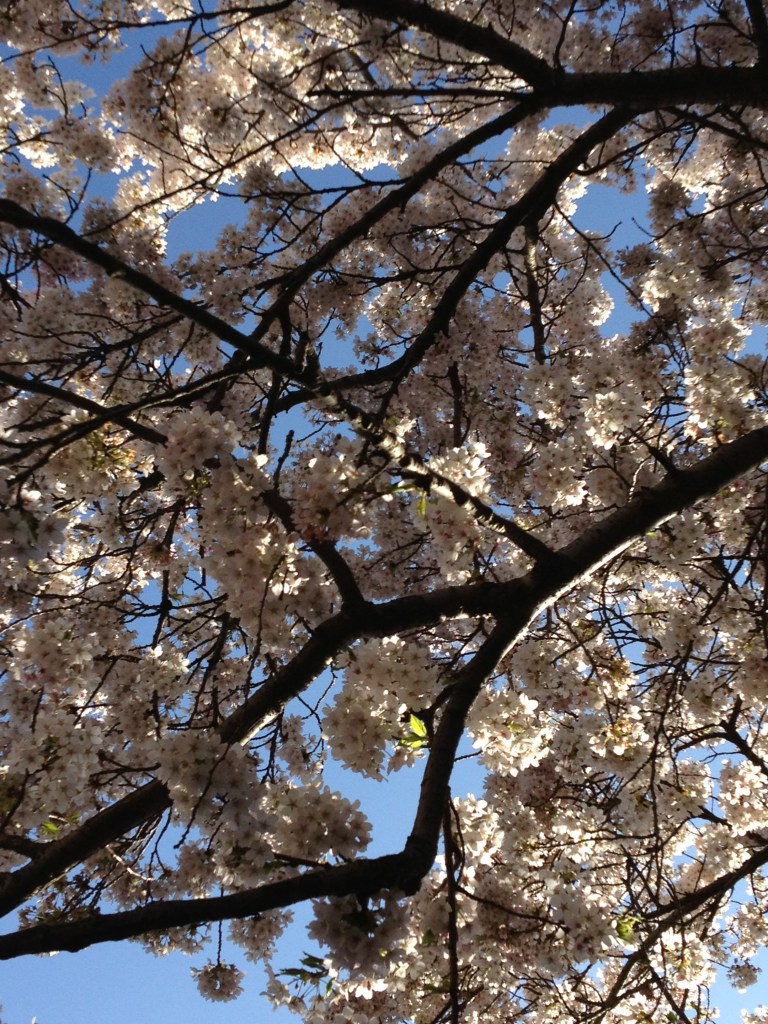
Happy writing, however you do it. Here is a taster of my photo prompts for today: